Business News Archives – Community Finance Ireland - Celebrating 25 Years of Impact
Click here to view our all island annual report 2023 View Now

Share this article:

We are delighted to share with you a new series of workshops from our colleagues at CO3. The Financial Resilience for Small Charities Programme gives practical financial resilience training designed specifically for small charities with an annual income under £500,000. These sessions will take place at various locations throughout Northern Ireland between November 2026 and March 2027.

Build a More Financially Resilient Organisation
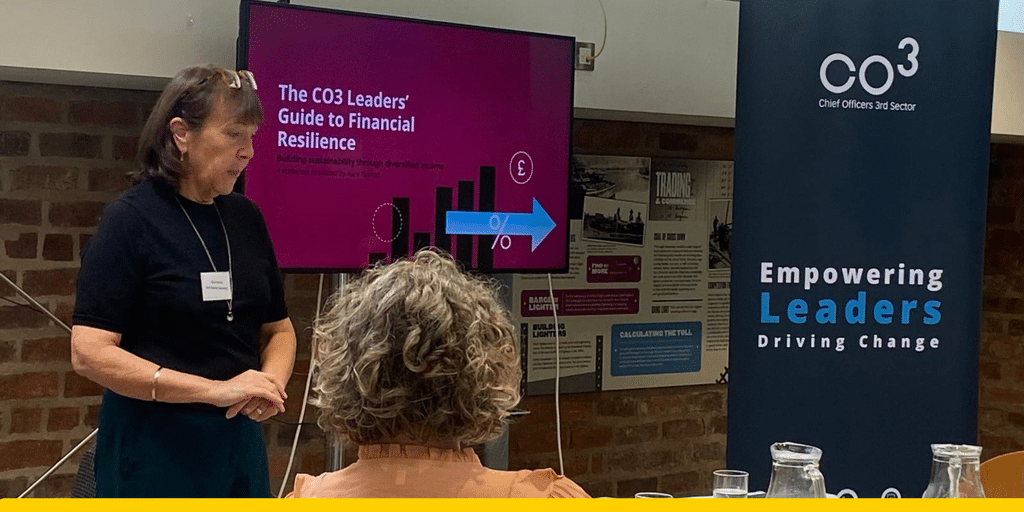
For small charities, financial resilience isn’t just about managing a budget. It’s about having the confidence, knowledge and practical tools to make better financial decisions, strengthen your funding position and build an organisation that can sustain its work for the long term.

In partnership with Halifax Foundation for Northern Ireland, CO3 is bringing a series of 10 practical Financial Resilience workshops to communities across Northern Ireland between November 2026 and March 2027.

Designed specifically for small charities and organisations with an annual income under £500,000, each half-day session will bring together a small group of local leaders for practical learning, funding guidance and peer support.

Thanks to the support of Halifax Foundation for Northern Ireland, these workshops are free for both CO3 members and non-members.

What You Will Gain
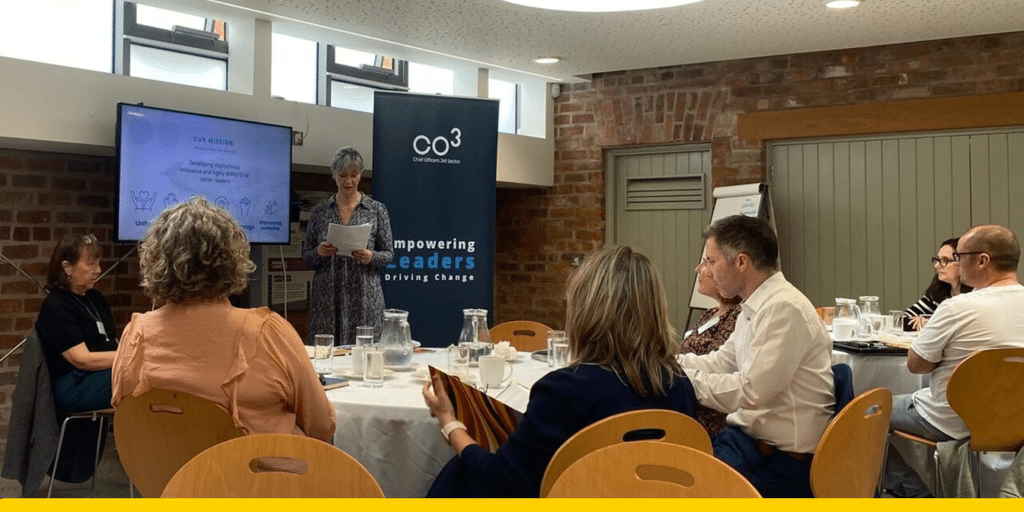
During the session, you’ll explore practical ways to strengthen the financial resilience of your organisation, with specialist guidance designed around the realities facing smaller charities.

You’ll also hear directly from sector experts with practical advice and tips on funding applications, and have the opportunity to connect with other charity leaders in your area facing similar challenges.

Participants will receive:

  • A practical, specialist-led Financial Resilience workshop
  • Funding application tips and guidance from Halifax Foundation
  • A copy of the CO3 Leaders’ Guide to Financial Resilience
  • Lunch and an opportunity to connect with other local charity leaders
  • Half-price CO3 membership for one year, giving you continued access to CO3 resources, events, connections, peer support and signposting

Each session is intentionally limited to up to 16 participants, creating space for practical discussion, questions and shared learning.

Meet the Coaches
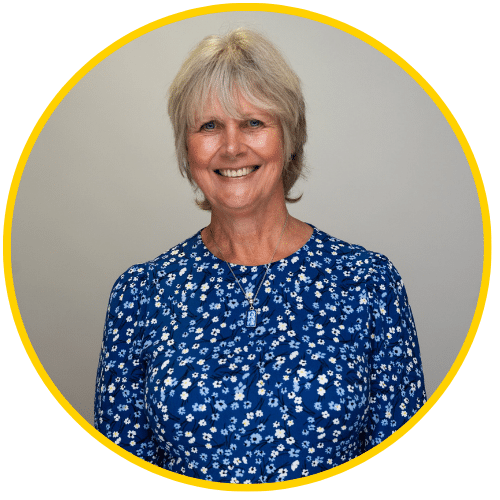
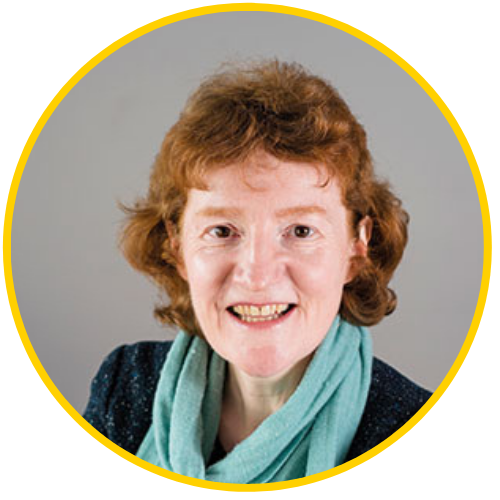
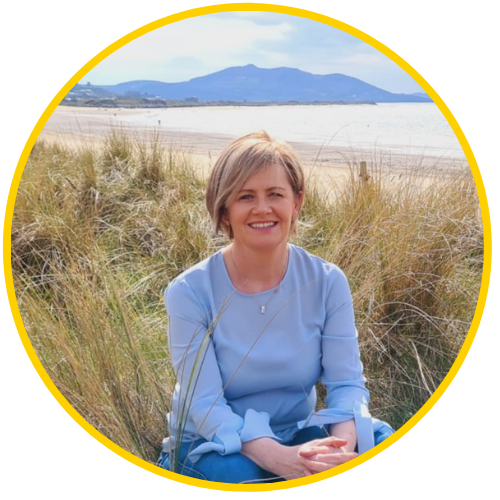
Helen Surgenor

With a background in marketing, communications and event management, Helen Surgenor’s career in fundraising spans more than 30 years from starting as a schools’ fundraiser for NSPCC in Belfast to working for Cancer Research UK and Queen’s University Belfast, where she established the health fundraising team within the Development & Alumni Relations office.

Helen has led high performing fundraising teams in three Universities across the UK and has experience of major gifts/philanthropy, community fundraising, regular giving, legacies and Trusts & Foundations. Helen has been working as a consultant since 2021, helping local charities to develop new income streams.
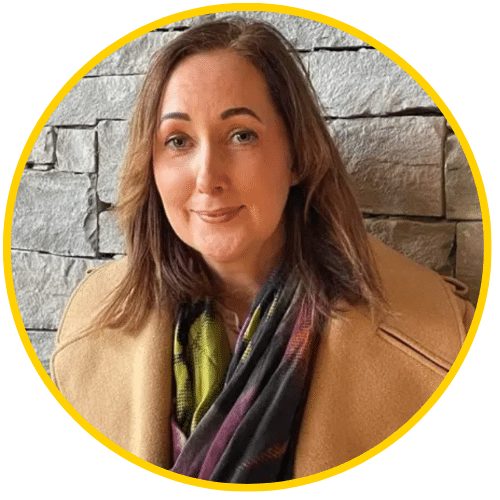
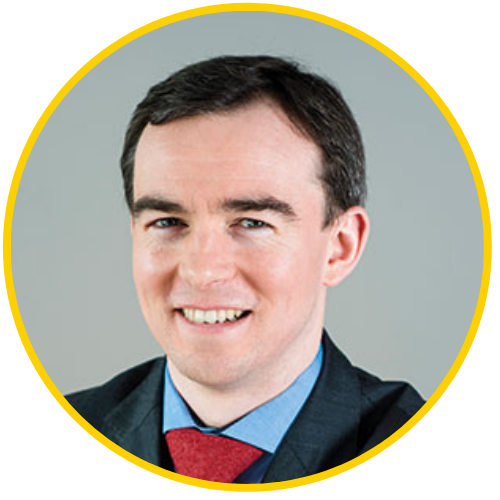
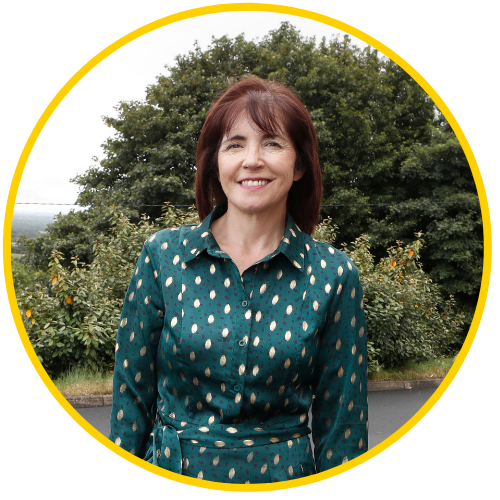
Siobhan Hanley

Siobhan Hanley is a senior advisor specialising in fundraising strategy, organisational sustainability and leadership support. With more than 27 years’ experience across national and international charities, she now works on project and contract assignments that help organisations build resilient funding models and navigate periods of change or growth. Her work focuses on creating strategic clarity and strengthening the foundations organisations need for long‑term sustainability. 
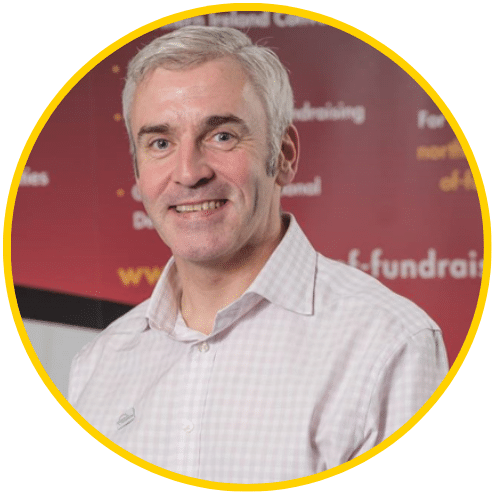
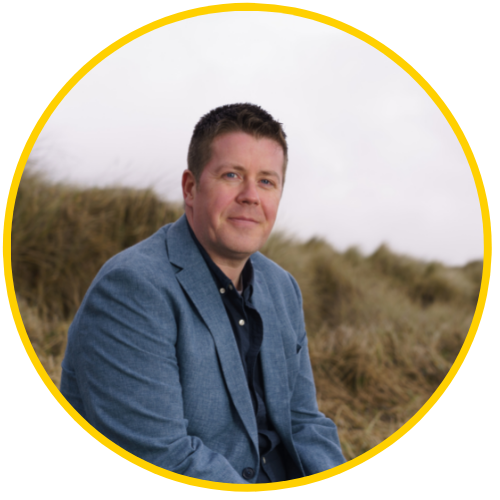
James Laverty

An experienced funding and third sector professional with over 25 years’ experience across heritage, education, community and voluntary organisations. Currently a Project Officer with Social Enterprise NI on the PEACEPLUS-funded RiSE (Rural Innovation in Social Enterprise) project, supporting rural innovation and social enterprise across Northern Ireland and the Border Counties.

Alongside this role, James provides consultancy in grant-making, funding assessment, capacity building, stakeholder engagement and fundraising strategy. Previous roles include Grants Manager for Belfast Charitable Society and the James Kane Foundation and Engagement Manager at the National Lottery Heritage Fund.

James holds an Advanced Diploma in Social Enterprise and bring extensive experience across Trusts, Foundations, EU, Lottery, international and council funding, as well as more than 20 years’ involvement with the Chartered Institute of Fundraising NI.

How to Register

Simply visit the CO3 Website, clicking the link below for your preferred date and location. All sessions run from 11:30am to 2:30pm

Date & TimeTownVenueBooking Link
4 Nov 2026
BelfastBlack Mountain Shared SpaceBook Here
18 Nov 2026
EnniskillenFermanagh HouseBook Here
1 Dec 2026
NewryBolsterBook Here
10 Dec 2026
ColeraineEnterprise CausewayBook Here
12 Jan 2027
NewtownabbeyMallusk Enterprise ParkBook Here
28 Jan 2027
NewtownardsArds Business HubBook Here
4 Feb 2027
LisburnNavigation HouseBook Here
10 Feb 2027
CookstownRural Community NetworkBook Here
4 Mar 2027
Derry~LondonderryOld Library TrustBook Here
25 Mar 2027
BelfastCO3 CentralBook Here

Share this article:

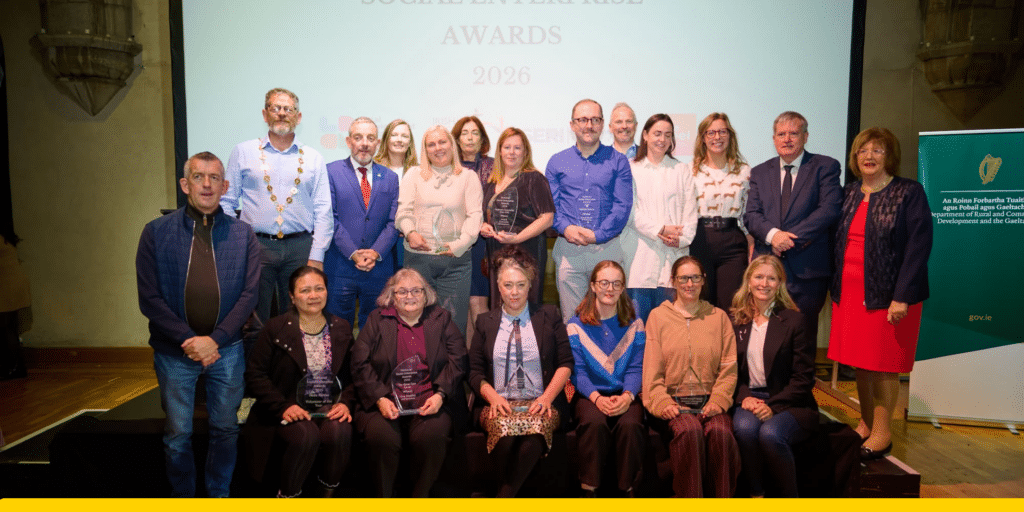
Community Finance Ireland are proud to be a long standing sponsor of the Social Enterprise NI Awards. The 2026 edition of the awards took place in Belfast’s Crowne Plaza Hotel on Friday 23 October. The gala event brought together fantastic social enterprises working across the length and breadth of Northern Ireland.

The winners and finalists are living proof of social enterprises’ unique grassroots power to tackle inequality and strengthen communities. It also highlights the importance of Social Enterprise as a key contributor to NI’s Good Jobs Agenda.

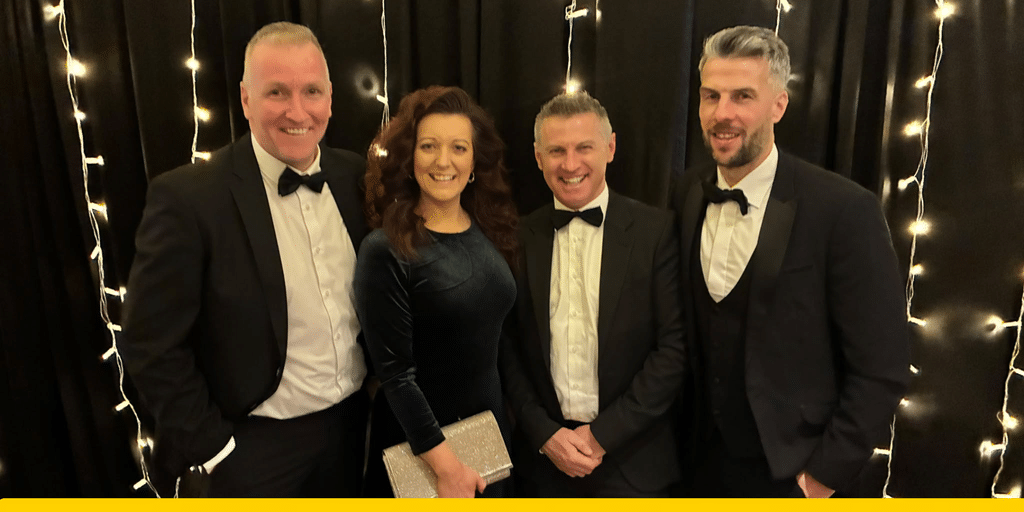
Team CFI attend the Social Enterprise NI Awards 2026 from L to R: Phelim Sharvin, Stephanie Nicholl, Donal Traynor and Michael Mullin.

The night of the Social Enterprise Awards for NI is always a noisy one. This is because this is the only time throughout the year that many of these vital, life-changing organisations have the opportunity to shout about what they have achieved.

This year was no exception. The room was packed full of social entrepreneurs, dedicated staff and many of the beneficiaries of organisations. Organisations like The Resurgam Community Development Trust, winner of the Social Enterprise of the Year. They look after nine profit-generating social enterprises that provide employment, training and fund their youth and community work across NI.

Habitat for Humanity ReStore won Environmental/Circular Economy Social Enterprise of the Year. They have helped 138,000 people access low-cost materials to improve their homes. As well as providing a new home for 57 of kitchens and diverted 1,600 tons of reusable materials from landfill across Ireland.

Telling a Bigger Story

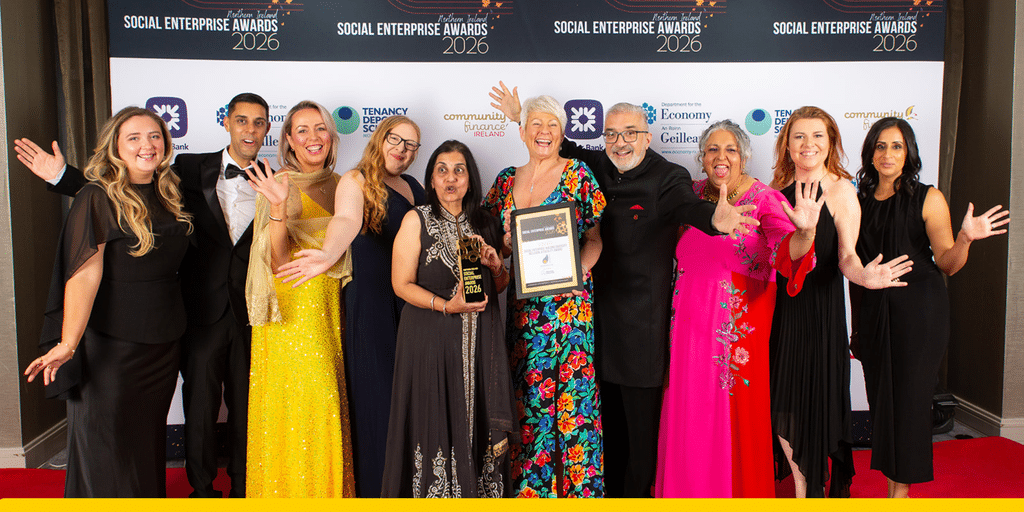
Arts Ekta Ltd celebrate their win for Social Enterprise Building Diversity, Inclusion, & Equality Award

While other award ceremonies only celebrate excellence, these awards tell a much bigger story as well. In towns, cities and rural areas of Northern Ireland, people are being excluded from everyday life. Communities are crumbling and hope for a more prosperous future is thin on the ground. The result is pressure on public services that are out of budget and out of the loop on finding the kind of flexible on-the-ground solutions that are second nature to social enterprises.

This year’s winners ranged from ARC Fitness, a gym that helps people live with substance use disorders. To Arts Ekta Ltd, a creative intercultural organisation that transforms communities and is home to the Belfast Mela. The Mela is the largest celebration of cultural diversity on the island of Ireland.

Solving Issues in Their Local Area

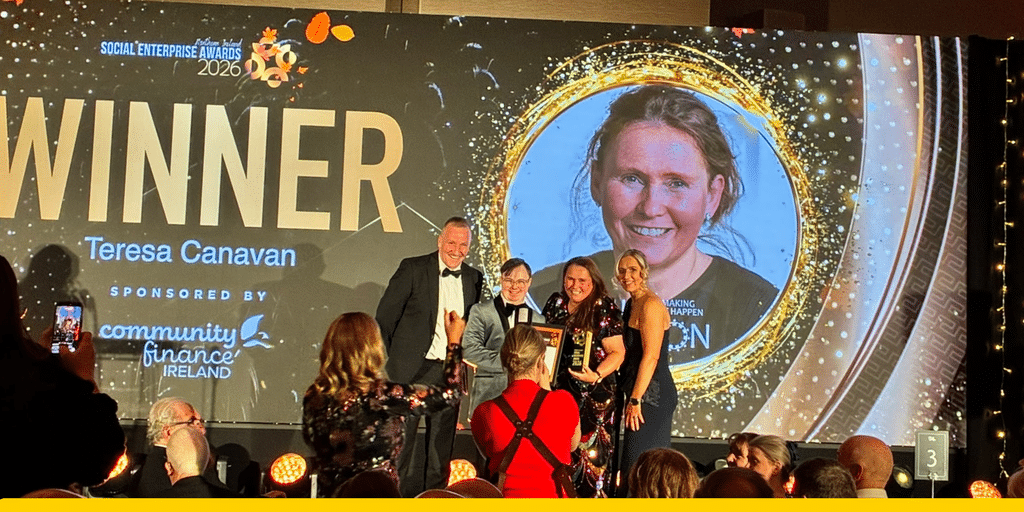
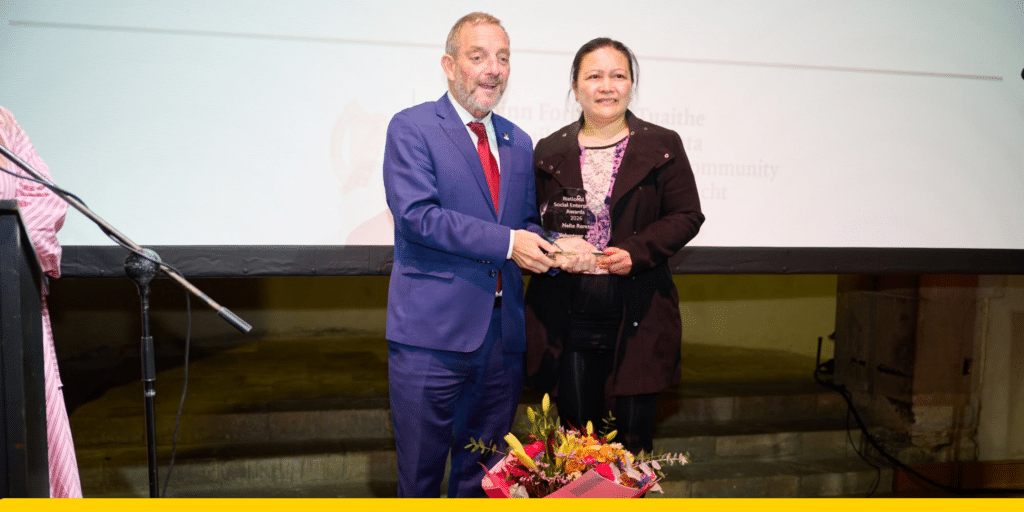
CFI’s Phelim Sharvin presents the award for Leaders of the Year to Rural Action’s Teresa Canavan and Gary Rutherford from ARC Fitness.

Winner of the public vote award was Harry’s Mates in Ballynahinch. They are a group that empowers adults with learning disabilities and/or autism. Through paid employment and/or voluntary opportunities, this team helps service users to develop life skills. As well as self-esteem, crucial for independence.

Each of these organisations saw an issue in society and wanted to find a solution to it and crucially an income stream to pay for it. In a world facing unimaginable challenges ahead, you could argue it’s social entrepreneurs like these that we should trust with our future.

A full list of the winners are below:

The Winners

Best New Start Up
Winner
: Silent Cuts,
Highly Commended: Little Weavers Day Care

Community Based Social Enterprise
Winners
: Lower Ormeau Residents Action Group & ARC Fitness

Rural Social Enterprise Award
Winner
: Easilink Community Transport

Credit Union of the Year (up to £25m)
Winner: Ormeau Credit Union

Credit Union of the Year (over £25m)
Winner
: Lurgan Credit Union
Highly Commended: Waterside Credit Union

Environmental/Circular Economy Social Enterprise of the Year
Winner
: Habitat for Humanity ReStore
Highly Commended: Repair & Share Foyle

Best Use of Social Media
Winner
: Downpatrick & Co Down Railway,
Highly Commended: Silent Cuts and Seasons of the Glens

Consumer Facing or Product Based Social Enterprise (Public Vote)
Winner
: Harry’s Mates

Social Impact Award
Winner
: Habitat for Humanity ReStore

Young Person of the Year
Winner
: Sophie Bagchus, Carrickfergus Enterprise

Emerging Leader of the Year
Winner
: Christopher McCausland, Downpatrick & Co Down Railway
Highly Commended: Sean Hanna NOW Group

Leaders of the Year
Winners
: Theresa Canavan, Rural Action & Gary Rutherford, Arc Fitness

Social Enterprise Building Diversity, Inclusion, & Equality Award
Winner
: Arts Ekta Ltd
Highly Commended: Voicing the Void

Social Value Partnership
Winners
: Heron Bros working with Cancer Focus, CAN and WomensTec / Deloitte working with NOW Group

Outstanding Team Award
Winner
: NOW Group
Highly Commended: Seasons of the Glens

Social Enterprise of the Year (up to £500k)
Winner
: Seasons of the Glens

Social Enterprise of the Year (over £500k)
Winner
: The Resurgam Community Development Trust.

Share this article:

Hire Community Finance Ireland’s fresh, modern board room on Glengall Street for your next meeting. Located in Belfast overlooking Grand Central Station we have a bright, professional space ideal for meetings, workshops, presentations, and hybrid video enabled sessions.


What’s Included

  • Seats up to 14 people boardroom style
  • Large plasma screen for presentations
  • Speaker and camera setup for video conferencing
  • Tea, coffee, and water available
  • Bring your own catering
  • Air Conditioned
  • Free Wi-Fi
  • Central Belfast Location
  • Lift access (6th Floor)
Community Finance Ireland Room Hire

Availability

Our boardroom is available Monday–Friday, 9am–5pm only.
A viewing is recommended before booking to ensure the space meets your needs.


Who Can Book

As a social enterprise, we proudly offer this space exclusively to charitable organisations & social enterprises who share our commitment to community impact.


How to Book

To make an enquiry or for more information, simply contact Nick Heath +44 (0) 2890 315003 or email [email protected]

Share this article:

The launch of a new guide supported by PTSB and CFI encourages community groups to learn more about social finance by showing six ‘quick and easy’ steps to apply.

€250m in loans facilitated to more than 2,200 community and voluntary groups, social enterprises, community sports clubs and family resource centres by SFF. Who today launched a new How-to Guide to encourage more community organisations across Ireland to apply for Social Finance.

The online Guide is supported by PTSB and Community Finance Ireland. It sets out a community-focused application process with a quick turnaround, minimal red tape and no personal guarantees are required.

Social Finance Guide Community Finance Ireland PTSB SFF
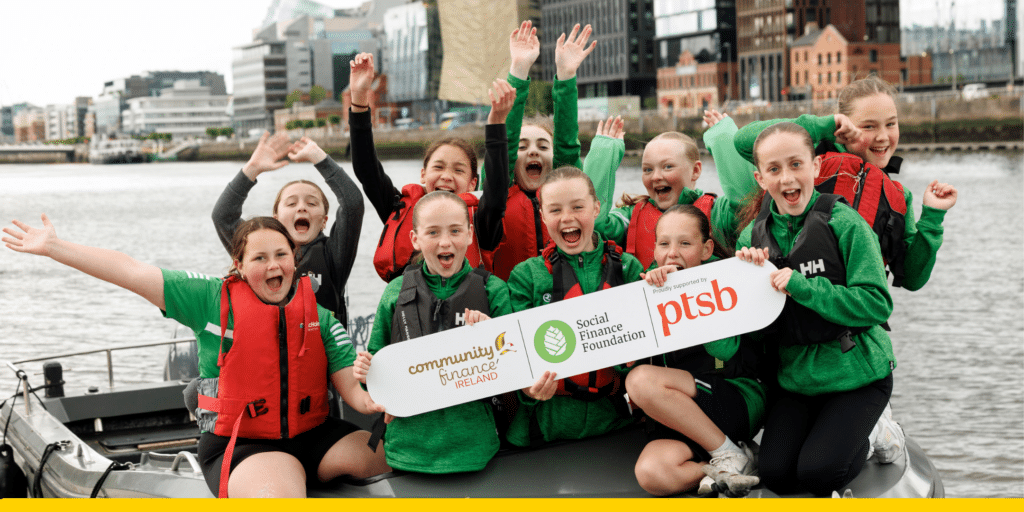
Young members of St. Patrick’s Rowing Club in Ringsend Dublin. New How-to Guide for community and voluntary groups on accessing and applying for social finance, see https://sff.ie/guide Photo Credit: Andres Poveda.

SFF’s CEO Garrett O’Donohoe said:

“All community and voluntary groups, social enterprises and grassroots sports projects are eligible to apply for social finance. The Guide sets out clearly the steps involved. An application can be approved within just three weeks. Through this initiative community groups and voluntary organisations, can access loans of between €10,000 to €1,000,000+ without personal guarantees.”

In the financing model used, SFF provides the funding to dedicated community lending organisations. This includes Community Finance Ireland (CFI) which then works directly with recipient groups.

One such group who have benefitted from community loans from CFI is St. Patrick’s Rowing Club in Ringsend, Dublin. The club approached CFI when they needed to bridge a gap in grant funding. The loan they received from CFI enabled them to purchase and install a new pontoon. This is now in place on the river Liffey to launch and store their skiff boats.

In the Guide CFI describes how quick and accessible the process is. CEO Donal Traynor said:

“CFI is proud to work alongside community organisations, clubs and groups across the island of Ireland, supporting their ambitions and the positive impact they bring to their communities. I’d like to thank PTSB and Social Finance Foundation for their support in bringing this how-to guide to life. It’s a practical resource to help organisations take the next step in accessing social finance. We encourage any community group with a dream for their locality to get in touch and find out if a loan is right for them.”

The Guide, and more information about Social Finance, is available here.

Share this article:

Responsible Finance have launched a new report at a packed Parliamentary event. The report reveals Responsible Finance members loaned a total of £389.9 million in 2025. This is empowering communities, grassroots sports and charities to unlock opportunities.

The launch event for the report at Parliament Buidlings in Westminster was well attended. Responsible Finance’s partners and supporters heard from four fantastic customers. These clients described their experiences of Responsible Finance and its impact.

A People Centric Approach

CFI’s Head of Community Finance for Northern Ireland, Phelim Sharvin travelled to the event. He welcomed the opportunity to hear how other Social Finance providers are using trusted word of mouth referrals. How they’re offering accessible, flexible finance with a people centric approach. He said that:

“It was great to meet with so many like-minded people who are doing great things with Social Finance investment. Meeting many other Community Development Finance Institutions who are achieving a massive Social Impact across the UK. It was fantastic to hear how other Social Finance providers are driving high levels of inclusive growth, building an inclusive finance ecosystem. More projects means more support which in turn means a greater impact.”

The report includes a case study showcasing one of the many great projects that Community Finance Ireland has supported. Kilcreggan Homes is an independent charity that provides housing, day and employment opportunities for adults with a Learning Disability, Autistic Spectrum Condition or an acquired brain injury. With Community Finance Ireland’s support they were able to expand its residential accommodation offering.

The report outlays that in 2025, Community Development Finance Institutions (CDFIs) loaned £389.9m. This 21% more than 2024 and £100m more than 2023.

CDFI Track Record

Of this £389.9m, they loaned:

  • £181.4 million to small businesses and start-ups, up 28% from 2024. Starting 5,741 new businesses and creating 7,399 new jobs.
    • 37% of these loans (and 45% of microenterprise loans) were to women-led businesses21% of these loans (and 63% of microenterprise loans) were to Black and Ethnic Minority business leaders88% of small businesses had previously been declined by another lender
    • They delivered more than 36,000 hours of business support
  • £74.1 million in flexible, patient, long-term finance to social enterprises and charities to strengthen communities and create long lasting change
    • 54% of these loans (and 84% of their value) were to social enterprises led by women
    • More than half of the social enterprises operate community, health, housing, care and public services
  • £129 million in affordable personal loans, a 58% increase from 2024, saving 140,683 customers between £25.4m and £52.1m in interest
    • Almost half of these loans were used to pay essential bills and expenses
    • 30% were for appliances and furniture
  • £5.1 million to homeowners, improving the quality of homes and enabling energy efficiency upgrades

If you’d like to read the full findings of the report you can view it here.

Share this article:

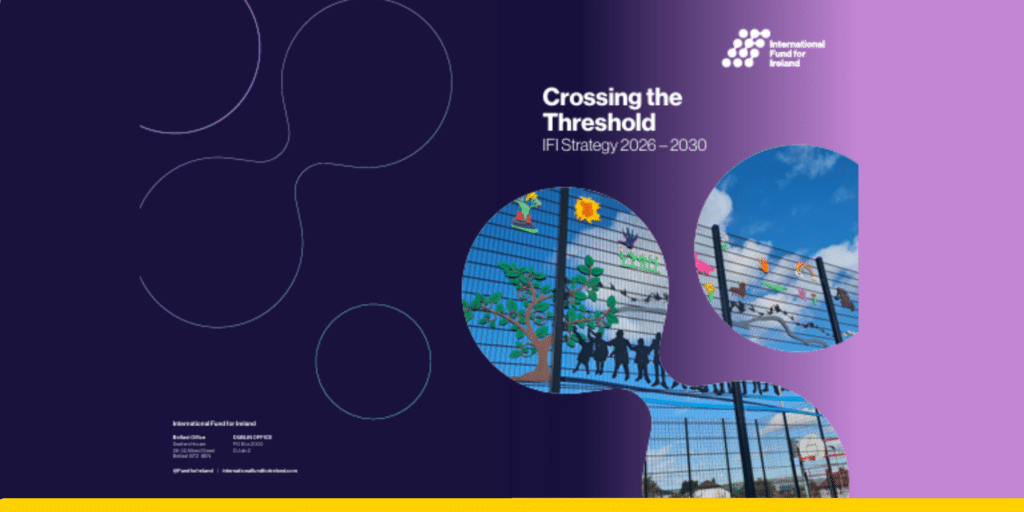
The International Fund for Ireland (IFI) has officially launched its new five-year strategy. It marks the next chapter in its 40-year history of peacebuilding across Northern Ireland and the border counties of Ireland.

At the point of launch of this 5-year strategy, it is anticipated that the IFI has £20m-£25m. It will continue to seek investment in response to need. This strategy signals a shift toward a needs-based, community-led co-design model. It prioritises local needs to address issues that threaten to destabilise peacebuilding efforts.

A Flagship Celebration

The launch event took place at Black Mountain Shared Space. The building, a former interface beside the Million Brick Peace Wall in West Belfast. It is just one of the many success stories supported by the IFI and its partners in recent years. More than 30 metres (approx. 100ft) of barrier in the Ballygomartin Road was removed to make way for this state-of-the-art, cross-community shared space facility.

More than 200 stakeholders were in attendance. This included representatives from the UK and Irish Governments. As well as US Consul General and international observers who came together to mark four decades of progress. They also heard the Chair of the IFI set out its exciting vision.

IFI Chair, Shona McCarthy said:

“As we celebrate 40 years of the IFI, we remain committed to its role as a supporter of risk-takers, our new strategy aims to empower local communities to identify their own challenges, fostering sustainable peace through tangible partnerships and innovative problem-solving. We seek to unearth quiet peacebuilders – individuals and organisations whose work in arts, culture, sport and enterprise contributes to social cohesion, even if they do not traditionally define themselves as peacebuilders. Our internationalism, independence, and ground-level relationships remain central. This strategy allows us to be agile and flexible, taking the necessary risks to walk alongside those we seek to support.”

The IFI continues to benefit from its unique international backing. It provides a level of neutrality and independence that allows it to remain a trusted partner in the Peace Process. Key to this is the longstanding financial support from the US Government. A government who, last month, announced support totalling $4 million for the IFI. The UK and Irish Governments continue to support the IFI’s work. This includes a commitment of €4m for 2026 from the Irish Department of Foreign Affairs and Trade.

CFI’s Work with IFI

CFI have partnered with the IFI to deliver a number of cross-border, cross-community peacebuilding projects during both organisations’ storied history. Most recently the NetWorx25 Project welcomed 10 organisations from diverse communities, to avail of business support and cross community facilitation, with a view to generating ideas around local social enterprise and sustaining their respective communities.

Michael Mullin, NetWorx25’s Programme Manager attended the launch event and said:

“I was honoured to attend IFI’s 40th Anniversary celebration and new strategy launch. It was inspiring to hear the continued commitment to peacebuilding, reconciliation, and community development across the island of Ireland — work that remains as important today as ever. Through my own involvement in the Networx25 Programme and the Better Together project in Ballinamore, I’ve seen first-hand the value of creating spaces where communities can connect, collaborate, and build lasting relationships through shared goals and local leadership. A sincere thank you to IFI for 40 years of transformational support and for continuing to champion a shared and positive future for all.”

To view IFI’s new five year strategy document, click here. And you watch the latest NetWorx25 Podcast episodes below:

Share this article:

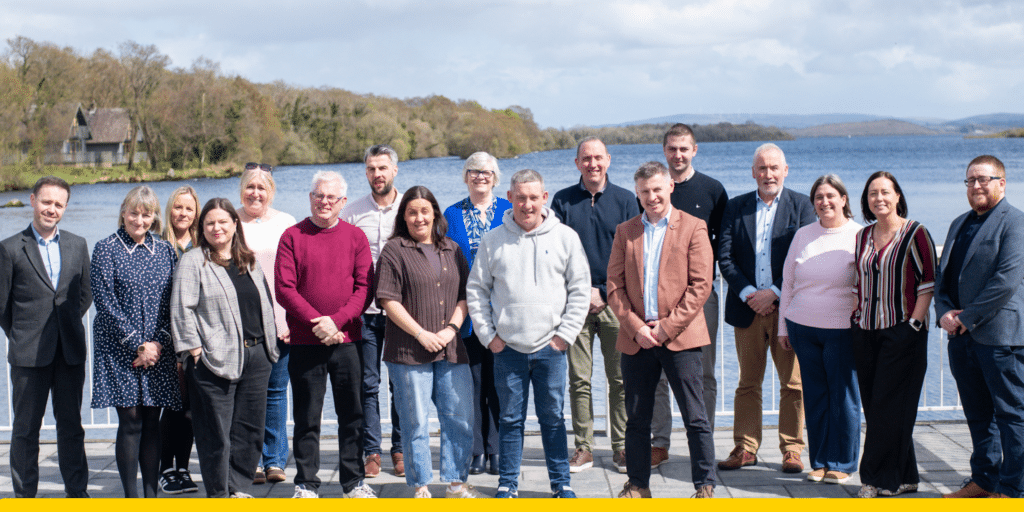
Understanding the characteristics of high performing boards was the topic of the morning. Community Finance Ireland Board of Directors met for their annual away day in Ballymascanlon Hotel earlier this spring. They were joined for the occasion by Patrick Dunne. Patrick is a business and social enterprise expert and author of the award-winning book, ‘Boards’.

During this insightful session, Patrick took Board members through a model for board effectiveness. He also outlined the important role that purpose, people and process bring to building momentum. Patrick invited members to reflect on their own characteristics. And to consider the type of alignment that leads to highly effective functioning of both executive teams and boards.

As a values-driven organisation, Patrick’s deep dive into ‘the big nine cultural values’ cited by most leading companies as having the greatest impact on results was hugely valuable. Patrick covered topics like collaboration and agility to performance and innovation. He invited attendees to explore the role that these values have in the work of the Board. But also how vital it is to cultivate a strong, collaborative and open culture at board level.

Invaluable Opportunity

Commenting on the day, CFI Group Chair, Catherine Blackbourne warmly thanked Patrick. She appreciated him taking the time to share his expert insights.

“It was a wonderful opportunity for CFI board members to reflect on what they can bring to the table to support the organisation to grow and thrive. Patrick’s session was an invaluable opportunity for each of us to think about our own strengths, understand the power of self-awareness and delve into how we can add value at every Board session and support the team in their work on the ground.”

She added, “On behalf of my fellow Board members, I’d like to say a particular thanks to our UCIT Ireland Chair Amanda Zahringer for facilitating such a thoughtful and engaging away day and giving us the opportunity to come together and strengthen how we work collectively to support CFI’s mission.”

Following Patrick’s session, the Board and Executive Team turned their attention to mapping objectives for the year ahead. This was in line with CFI’s organisational strategy.

Join Our Board

Community Finance Ireland have upcoming vacancies on our Board of Trustees.

From our next AGM in June, we look set to welcome some more fresh faces into the fold, with a particular interest in those actively involved in the community and voluntary sector, be that as a volunteer or in a professional capacity.

To find out more about this opportunity, click here.

Share this article:

The Board of European Finance Federation’s decision to appoint Community Finance Ireland’s Donal Traynor sees him become the First Irish CEO appointed in their history.

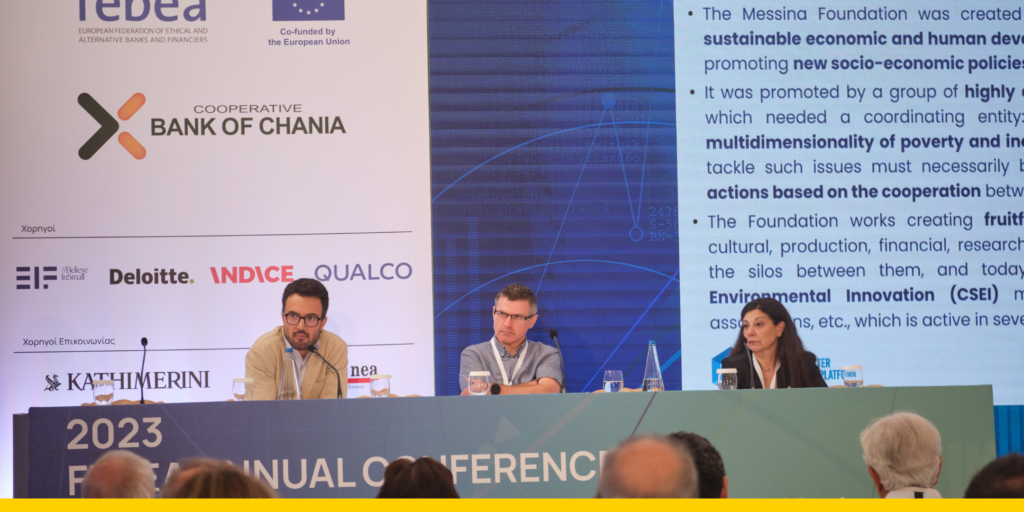
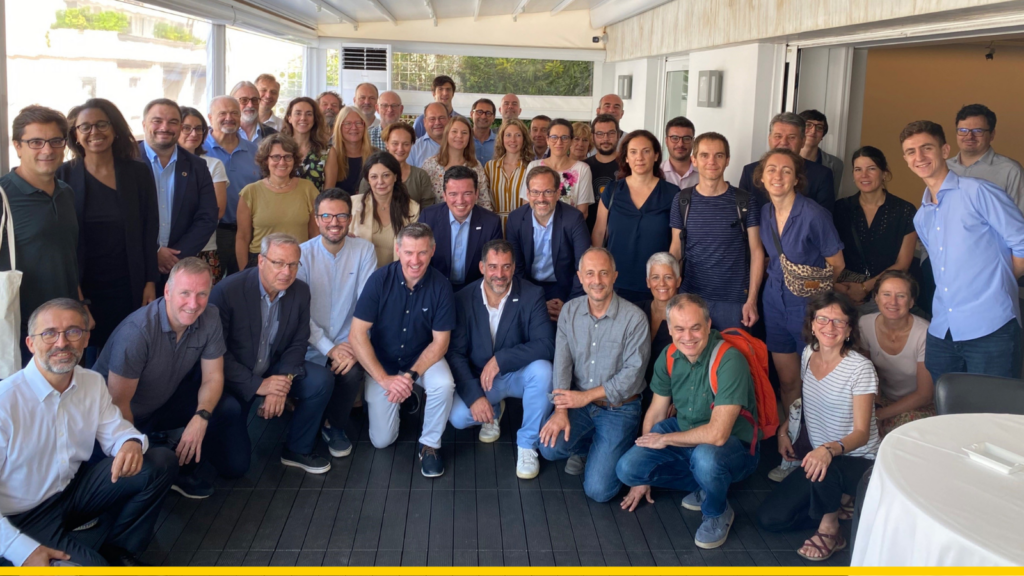
Dónal Traynor is the CEO of CFI. FEBEA has appointed him to their Board. He is the first Irish board member of the European Federation of Ethical and Alternative Banks (FEBEA). FEBEA is an umbrella group of 33 financial institutions from 15 European countries which develop and promote ethical finance principles.

FEBEA announced the appointment, following the Annual Conference in Athens last month. Here Mr. Traynor spoke to delegates about the impact of CFI’s work. Through the provision of social finance solutions to voluntary-led and grassroots organisations, CFI are having massive social impact.

Donal Traynor Community Finance Ireland first irish CEO appointed to FEBEA Board

Community Finance Ireland has been a member of FEBEA since 2016. They offer social finance loans to community organisations which drive social impact across different sector. These include sport, faith-based groups, social enterprises and community projects.

CFI established in Belfast in 1995. It has supported a wide variety of organisations across the island of Ireland to a value of €100m in social finance.

Speaking on his appointment, Mr. Traynor said,

“I’m delighted to join the board of this excellent European network. FEBEA’s mission to work for the development of a fairer, more sustainable and more inclusive society is directly aligned with our mission at Community Finance Ireland. We’re proud to offer tailored supports to organisations that are creating palpable social change in our local communities across Ireland. Just as our peers in FEBEA do in communities right across Europe. For CFI, for our clients, and for the wider Not-For-Profit sector in Ireland, this closer collaboration with our European partners is an important step. We know from working with volunteers on the ground in communities from Bantry to Ballymoney, Donegal to Dublin, we have much to share with our colleagues across Europe and we will have much to learn from them.”

Pedro M. Sasia, President of FEBEA said:

“For FEBEA, the participation of an organisation like Community Finance Ireland, deeply aligned with ethical finance values and the spirit of community, is of great importance. That’s why we’re beyond happy to see Donal Traynor stepping up and actively engaging in the network’s most vital body: the Board of Directors.”

Originally from Cavan, Mr. Traynor was appointed to CEO of Community Finance Ireland in 2020, having led their business in the Republic of Ireland since 2004. He is the youngest CEO in the organisation’s history and the first to come from a non-banking background.

For more information on FEBEA, visit their website here, and to learn more about Community Finance Ireland’, visit our home page’s story click here.

Share this article:

CFI has attained the prestigious ISO 9001 Quality Management System accreditation. The award is given on an all-island basis.

This significant accomplishment reflects our unwavering commitment to excellence in serving our clients and advancing positive social impact.

The ISO 9001 standard is built upon a set of quality management principles. This includes a strong customer focus, active involvement of top management, a process-oriented approach, and continuous improvement. By adhering to these principles, we have established a solid foundation for organizational excellence.

Benefits to CFI and Our Clients

This achievement brings several advantages to both Community Finance Ireland and our valued clients:

Increased Efficiencies

All our processes aligned and comprehended by every member of our organisation. This means we can enhance the efficiency of our internal controls, streamlining our operations and ensuring optimal performance.

Enhanced Reputation

The ISO 9001 accreditation further strengthens our reputation as a credible and genuine charity and social enterprise. It underscores our dedication to advocating for positive social impact and demonstrates our commitment to delivering high-quality services.

Clear Objectives and Commitment

The process assesses the overall context of our organisation. This enables an understanding the expectations of those affected by our work. As such we can clearly define our objectives. This enables us to showcase our unwavering commitment to excellence and the pursuit of our mission.

Customer Focus

We reaffirm our dedication to putting our customers first, consistently meeting their needs, and enhancing their satisfaction. This recognition ensures that our clients’ experience with Community Finance Ireland remains at the heart of everything we do.

Compliance and Governance

Attaining the ISO 9001 accreditation guarantees that we meet the necessary statutory and regulatory requirements. It strengthens our compliance and governance practices.

We extend our gratitude to our dedicated team, whose hard work and commitment have made this achievement possible. We are excited about the opportunities this accreditation brings and the continued positive impact we can make together.

Share this article:

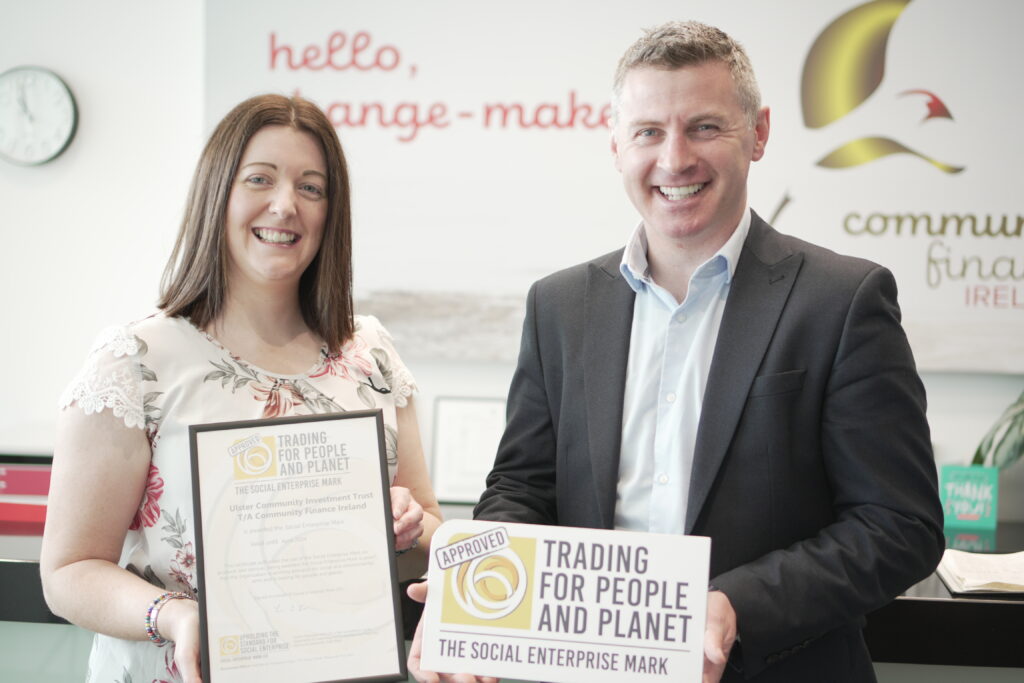
Community Finance Ireland is delighted to announce that we have earned the Social Enterprise Mark Accreditation. This prestigious accolade proves that we create real benefits for people and the planet, and demonstrates our deep commitment to social impact.

The Social Enterprise Mark independently assesses and accredits organisations operating as social enterprises. CFI use their finance offerings to create social and environmental impact, and they commit to reinvesting their profits back into their mission.

Community Finance Ireland’s CEO, Donal Traynor, expressed his excitement about achieving the Social Enterprise Mark accreditation, saying:

“We are thrilled to have received this accreditation, which confirms our ongoing commitment to creating positive social impact. At Community Finance Ireland, we believe that social finance can play a critical role in building a more equitable and sustainable future for everyone. Our recent Social Value Impact report and findings further demonstrate how social finance is working to achieve great results, and we are committed to continuing this important work.”

Social Enterprise Mark CIC are responsible for awarding the Social Enterprise Mark. It is the leading global authority on social enterprise. To achieve the accreditation, Community Finance Ireland underwent a rigorous assessment process. This evaluated the company’s social and environmental impact, governance structures, and financial sustainability.

SE Mark Donal and Stephanie
Community Finance Ireland’s Compliance Officer Stephanie NIcholl and CEO Donal Traynor awarded the Social Enterprise Mark Accreditation April 2023

Community Finance Ireland is a registered social enterprise. Therefore, CFI commit to using finance as a tool for positive social change.The company provides affordable loans to community and voluntary organizations, social enterprises, and charities across Ireland. Helping to build stronger communities and support important social causes.

The mark demonstrates Community Finance Ireland’s dedication to achieving high quality social impact. It also highlights CFI’s commitment to effective good governance controls, stakeholder engagement, financial transparency and ethical and good business practices.

Stephanie Nicholl, Compliance Officer at Community Finance Ireland said:

“The Social Enterprise Mark recognises and builds the capabilities of social enterprises as sustainable businesses that are dedicated to maximising social impact. The Mark recognises the value of our social impact, specifically with our clients that we work with in the Social Enterprise sector across areas such as sport, arts and heritage, community organisations, faith and church groups and the workspace provision.”

Stephanie further explains the importance of the recognition in the short video below:

Share this article:

As an all-island brand, with a growing team, our colleagues live and work in Down, Antrim, Meath, Donegal, Waterford, Limerick, Cavan, and Louth. Whilst they also have the option to work at our dedicated office spaces located in Ardee, Co. Louth or in Belfast City Centre.

In light of both the NI and RoI governments’ decision to relax Covid restrictions our team are now working “the new norm”.  

With Northern Ireland’s growing confidence in an office versus home working environment and the Republic of Ireland creating a Bill to pass legislation protecting employees working from home (The Right to Request Remote Work Bill 2021) the traditional five days a week, office based working model is now clearly in transition.

Our team at CFI, have technically spent the best part of the last two years working from home (often at the kitchen table or in some cases a bedroom) and as we settle into our new norm, we asked our people what were the pros and cons they learnt from their experience and how will this experience support them in their day-to-day delivery of social finance solutions to grassroots community clients and projects.

What Our Team Say

“With my home base at Strangford Lough, a hybrid working model allows me to maximise my use of time effectively as I can block out days for new client meetings and when at home, focus on administrative aspects.”

Phelim Sharvin, Head of Community Finance N.I

“Hybrid working is great and allows all colleagues to work where most comfortable. For me, being in the office is important for setting my own boundaries between work and home-life.”

Peter Smyth , Client Relationship Manager N.I

“Working from home has really helped me flourish in my career. I thrive on quiet time where I can focus on strategic papers or analytics and have found zoom meetings suit my working style.”

Nicky McElhatton, Marketing and Social Media Executive

Safe Working

“I joined CFI during the pandemic. My role is Front of House and I really enjoy the office environment. With a newly designed office space in Belfast, I can continue to work safely alongside others.”

Nick Heath, Front Office Administrator

“Having a blend of working-from-home and the office breaks up the week. With a flexible working schedule, this has really helped give me an improved work-life balance.”

Stephanie Nicholl, Compliance Officer

Missing Colleagues

“Working-from-home is something I have gotten used to. Although, I do miss the aspect of being in the company of my colleagues as work relationships are not always the same behind a screen.”

Sandra Cowan, Finance Officer

“My week is usually now 70% office based with 30% working-from-home. I have adapted well to this new rhythm and have also found that as a Manager of a team, the trust with my people has improved greatly.”

Barry Connolly, Group Chief Financial Officer

“The ability to work remotely has given me the chance to spend more time at home. With less distractions, my time spent working is more productive and I have my cats for company, all day.”

Emma Thompson, Finance Executive

Creating Relationships

“A blended approach allowed me to meet colleagues whom I would not of come into contact with as much whilst working remotely. I am able to create relationships were I can reach out to colleagues from different departments which is hugely beneficial as I start my career.“

Jack Lennon, Marketing Intern

“Hybrid working works excellently for me with a team based all over the country. It offers me the ability to work wherever I might be needed, for both my team and my clients. As long as my phone and laptop charger are optimized, I find the flexibility of different working locations can ensure I can be where I am needed at all times.”

Emmett O’Hara, Head of Community Finance RoI

“My role finds me on the road quite a bit, meeting clients. This regular travelling is balanced by my ability to work from my home on days where I am liasing with other team members and assisting clients from a remote location.”

Anne Graham, Client Relationship Manager Donegal and Connacht

Working Patterns

“My role has always been remote and as such, the hybrid working model has little impact on that working style. But what has been welcome, is that many of my colleagues now also have the same working pattern.”

Barry Symes, Client Relationship Manager South East Leinster and Waterford

“I joined Community Finance Ireland just over six months ago and have found zoom meetings invaluable in helping me connect with my new work colleagues.”

Nora Keogh, Client Relationship Manager Munster

“Working from the office is a key benefit to me that helps with my part-time hours and the logistics of family life. Office based work continues to be my personal choice but it’s great to have the ability to work from my kitchen on occasion.”

Terri Martin, Office Manager and Micro-Finance Lead RoI

Work/Life Balance

“Working remotely has never been a barrier to my ability to deliver great work. Nor to engage my colleagues or agency partners on key projects. I have found that meeting in person is always welcome. But that with excellent IT support working from home offers a flexibility that really suits my way of working. This new norm has shifted me from a ‘work – life balance’ view to a ‘life –work balance’ view and I love it.“

Lita Notte, Head of Marketing and Communications

“A hybrid structure has worked well for me. With the flexible option of remote work or going to the office I have a genuine sense of work-life balance. Time not spent commuting has been redirected to time spent in my local community.”

Pauline Carolan, Office Administrator

“A hybrid working system has been great for everyone here at CFI. With a small team, it allows us to grow resources in all regions of the island. And to connect with all communities. We swiftly introduced technology and IT supports to help our people. This gives them the tools they needed to continue to liaise with clients and each other. For me personally, it is great to have a balance with a new Belfast office acting as a central hub.”

Donal Traynor, CEO Community Finance Ireland

In summary, much like the uniqueness of our people, hybrid working offers different things for everyone. But in essence flexible working practices (either office or home) is successful and our team are very much “fans” of the new norm.

Share this article:

This time last year we all had hopes that the Pandemic would be done and dusted. We are all aware this didn’t happen. As we close off another year we will continue to live with its effects for a while yet.

We acknowledge Covid continued to affect us during the past 12 months. However we can confidently say that we supported both our clients and key stakeholders to achieve progress. Our support ensured that, whilst we were often asked to stay apart, we came together in ways that helped our clients deliver health, happiness and hope.

  • We took the opportunity to grow our local footprint.
  • We welcomed new team members Emmett, Anne, Pauline, Nora, Nick, Stephanie and Jack.
  • In Belfast our new head office was able to open its doors and support our new hybrid working model.
  • We helped deploy £7.1m to 354 charities on behalf of Department for Communities via the Covid- 19 Charities Grant Fund.
  • We collaborated with Rural Community Network and Dublin South Co Partnership on the launch of our All Island Recovery Loan
  • We collaborated with Joanne O ‘Riordan, Brendan Boyce Olympian Athlete and Patsy McGonigle on the launch of our All Island Sports Fund
  • We continued to work with key stakeholders. This included Invest NI, Enterprise NI and Department for Communities in Northern Ireland. As well as Social Finance Foundation, Rethink Ireland and DCU in the Republic.
  • We listened to and worked with 91 enquiries.
  • We welcomed an additional 62% increase in followers across our social media channels

All of the above are indications that despite hurdles the sector continues to seek support, insights and social finance.

Donal Traynor, Group Chief Executive, said the following:

“Whilst the Pandemic continues to challenge all communities we have seen greater solidarity across the whole island of Ireland. Clients are responding with innovative fundraising initiatives as-well as migrating to an online service (an investment we ourselves undertook in 2020) to help make the provision of services easier and sustainable.

The sector itself is not immune to trends. We expect to see hybrid events and campaigns plus sustainable, remote working facilities, as well as questions around how we play our part in supporting climate change targets.

All of the above offer the opportunity for us to continue to work with clients who want to ensure social impact is felt not just dreamt – we are here listening all the time and committed to finding solutions that support that ethos”.

Donal Traynor, Group Chief Executive

Share this article:

This week marks a reduction in some of the Covid-19 restrictions on the island of Ireland. While there is still a long road to recovery ahead, we have weathered the storm together and Community Finance Ireland continue to support our clients and stakeholders. Integral to this support is our recent move to new, state of the art premises for our head office in Belfast.

Whilst we have remained open throughout the Pandemic, supported our clients across the island and helped our people work from home whilst delivering HR best practices and tech ability, we as a group welcome the signals of a refreshed and re-energised way of working and delivering the service our clients rely on.

A new office might seem like an old way of doing business but there is nothing old or typical about Community Finance Ireland’s new core headquarters located at Glengall Exchange on Glengall Street in the city of Belfast.

Almost 10 years in the making the team’s ambition has always been to continue to evolve our services both for our clients and our people. And the new space does just that. Working with Belfast based She Said Brand and Design team, the space offers a light, open plan, modern facility with fast speed Wi-Fi, break out areas, a compact kitchen and a canvas for our Choose Change brand identity. Our team has also grown over the past 18 months – we have 18 team members now (pre -Covid we were 14).

Our Group Chief Executive Donal Traynor has this to say on the announcement:

“Whilst we all acknowledge that anxiety might have run very high, as we learned about Covid and found ways of living with it, we have proven our resilience as a community and in our ability to embrace change. Our expanded team, along with this energising work space brings the best of what we had, what we have learnt and what we need to continue.

The location at the heart of Belfast city reminds us of our business’s starting point whilst also reflecting that change is a constant and necessary part of the human condition. Our offices are within five minutes of most of Belfast’s popular spots. The location is also a key area of development, with the proposed extension of the Belfast Glider service and the construction of a new Rapid Transport Hub at the current Europa Bus Centre site, just metres from our new office.

We are delighted with the space, with how it will support our people’s desire for hybrid working and how it embodies our Choose Change mantra.“

Donal Traynor, Group Chief Executive Community Finance Ireland

Share this article:

Today (16 September 2021) Ulster Community Investment Trust Ltd t/a Community Finance Ireland held its all island AGM and officially launched its 2020 Annual Report.

Community Finance Ireland Annual Report Launches and 169 Community and Social Enterprise Projects Avail of Social Finance in 2020

The report published today highlights the following key takeaways:

Northern Ireland

  • £3.1 m of loan approvals into 37 local projects;
  • £9.1m to 315 social enterprises via much needed grant payments in collaboration with Department of Communities NI and SENI; and
  • £ 4.1m to 140 SME clients through the management of NISBLF Fund II.

Republic of Ireland

  • £2.6m/ €2.7m of loan approvals into 37 projects in the Leinster Region;
  • £1.4m./ €1.67m of loan approvals into 32 projects in the Munster Region;
  • £0.6m./ €0.5m of loan approvals into 25 projects in the Connaught Region; and
  • £4.4m/€4.6m of loan approvals into 72 projects in Ulster (including NI).

With a client portfolio, whose core assets are predominately its volunteers, the 169 projects saw their own belief mirrored back to them and secured term or bridging loans which supported them in:

  • Keeping their doors open;
  • Pivoting their business;
  • Ensuring their viability when their services were needed more than ever; and
  • Ensuring their sustainability as the island transitions to a new normal.

In what was an extraordinary year for the history the organisation and for the communities and citizens on the island of Ireland Donal Traynor Group Chief Executive said the following:

“The combined market conditions of Brexit and Covid left us all a little shaken in 2020. Yet it also stirred in us a reminder of the importance of access to social finance and the resilience of communities across our shared island.

Our partners in NI: Invest NI and Enterprise NI and Department for Communities, and in ROI SFF, Rethink Ireland and DCU also stepped up and showed their support to the ongoing sustainability and viability of the NFP sector.

It was a year like no other and yet we can confidently say that we supported both our clients and key stakeholders achieve great things and ensured that, when we were asked to stay apart we came together in ways that we could have only imagined.

As a result, we have much to admire and be proud of as our ongoing promise to ensure social impact is felt not simply dreamt continues”.

Donal Traynor, Group Chief Executive Community Finance Ireland

View the report in full here.

Share this article:

We’re asking Social Enterprises to put aside 15 minutes and you might win our €250 thank you voucher.

The launch of a collaborative project that sees the best social minds in Ireland get the support of European funding and thinking, is currently Live.

Our team are working with Dublin City University, Irish Social Enterprise Network and Rethink Ireland in helping to establish what type of financial models are missing for the sector, what models are working elsewhere across Europe, and what might a vibrant future finance model look like.

At a recent sold out event to launch this exciting, 2 year, research initiative our CEO Donal Traynor shared his thoughts:

“Community Finance Ireland speaks finance but hears people and this collaborative project is very much about this ethos. Our team are delighted to work on behalf of the sector to ensure that today’s, and tomorrow’s, social enterprises have sustainable and innovative supports and solutions that can deliver results for everyone”

With the next phase of listening now open – the project team are asking all social enterprises to give their views and help shape solutions that will support the sustainability and success of this sector, today and into the future.

Open the link below and get your thoughts across before 6th August 2021.

https://socialfinance.ie/survey/

If you would like more information on the Financing Social Enterprise in Ireland project – click here.

Share this article:

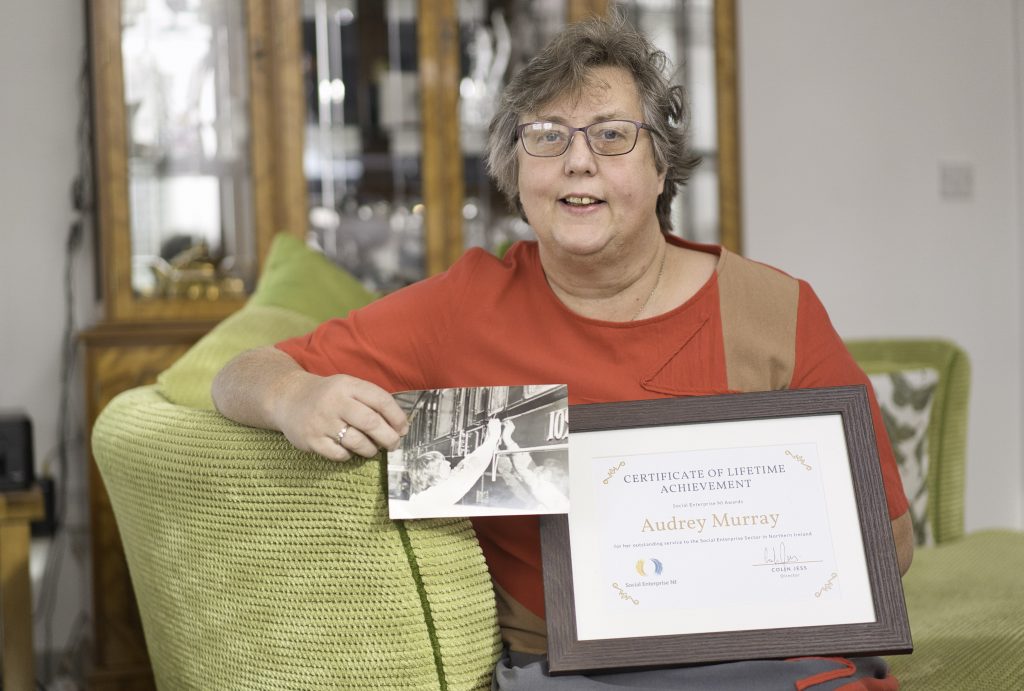
Social Enterprise NI have recognised Audrey Murray, MBE with a Lifetime Achievement Award. The sector has honoured her for services to the social enterprise sector in Northern Ireland. Audrey has spent her career as a champion for marginalised communities in Northern Ireland

Audrey has worked in the sector for over thirty years. Most recently as Business Development and Contract Manager with LEDCOM, she retired in 2020. She continues to serve on a small number of voluntary boards, including Community Finance Ireland and Ballyclare High School. 

Audrey began her career, working in Newtownabbey, Rathcoole and Monkstown to stimulate private enterprise. At the time the sector didn’t have an official name.  She said:

“I just knew I wanted to help people.  Back then there was a scheme call ACE, aimed at getting the long term unemployed into work, that included a paid work placement.  I asked to meet some of teenagers involved, specifically, a girl who was a hugely talented artist.  I’d been to art college but I knew this girl was so much better than me and had so much potential to make a living from her talent.  But when I asked her what her dreams were, she just wanted a year in the ACE scheme.  She hadn’t been shown how to dream big for herself.”

Limited Career Options

Audrey struggled with dyslexia as a child and left school unable to read or write properly. Audrey’s school presented her with limited career options. As she says “stitching knickers or slaughtering pigs or moving to England.” None of those options appealed to her. She was diagnosis with the condition in her teens. However, encouragement from her older sister, she took up a place in art college, which she loved. Though she never worked in the Arts, she used her creativity to develop solutions to business challenges. 

Working with many communities at grass roots level, she sometimes found herself the only female in a room. Never one to be intimidated, Audrey was always focused on what she wanted to achieve. 

“I have empathy with people who are being limited.  People need a champion to fight for them and I wanted to be that person, to make a difference.”

A Long Diverse Career

Audrey finds it is difficult to pinpoint just one highlight in such a long and diverse career. However in her role at LEDCOM she oversaw the creation of over 600 new social enterprises.  

“Social enterprise is a fantastic business sector and the word ‘business’ is deliberate, as they make money. But they also do good. They meet both social and economic needs, that other private and public organisations sometimes don’t even touch.”

Referring to her award, Audrey quipped:

“They don’t give you a lifetime achievement unless you’re old!  I’m retired now, but it was a wonderful recognition of all the people who I worked with throughout my career and the difference they made.” 

Dónal Traynor, Group Chief Executive at Community Finance Ireland said:

“We’re delighted that Audrey received this award, which is a testament to her tenacious attitude. Her determination is to always make a difference.  We’re lucky to have had Audrey involved with our Board. She mirrors our own values of Empathy, Integrity and Quality. She brings a direct way of working, attention to detail and a compassionate and forthright approach to doing good for those who need it most in society.”

Colin Jess, Director, Social Enterprise NI said:

“As the foremost support agency for Social Enterprises across Northern Ireland I was very pleased to present Audrey with this award on behalf of our agency. She has had a tremendous impact on the support and visibility of those in our communities who need it”.

Share this article:

A makeover for the annual ‘Willie Clancy Festival’ in Clare, an upgrade for Ballinasloe Town Hall Theatre, and new equipment for the Dublin Cliffhangers Climbing Club in Finglas. These are just some of the projects benefitting from Community Finance Ireland’s €30 million investment in communities in the last 4 years.

CFI are Ireland’s and the UK’s fastest-growing social finance provider. The organisation works with groups that drive social impact. This includes sports clubs, social housing organisations, community projects, faith-based groups, and social enterprises.

CFI launched their first ever first all-island impact report launched today (02.07.2020). Since 2016, CFI has loaned:

  • €8.6m to clients in Leinster,
  • €3.5m to clients in Munster,
  • €1.8m to clients in Connacht, and
  • €16.3m to clients in Ulster.

Dónal Traynor, Associate Director of Community Finance Ireland, said:

“We can provide loans ranging from €30,000 up to €500,000, and our finance products are specifically tailored for the community sector. We have waived arrangement fees to make loans as accessible and cost-effective as possible, we have a quick turnaround time for lending decisions, and – given the organisations we lend to are typically run by volunteers – we do not ask for personal guarantees.

There has been a default rate of just 0.75% on our loans since 2008, which is low by any standard and particularly when you consider that many of our loans are made available on an unsecured basis. This is in no small part due to the strong relationship which we have developed with communities over time.”

Donal Traynor, Associate Director Community Finance Ireland

Panel Discussion

Following the launch of their all island Impact Report, CFI hosted an online panel discussion. It covers the topic of “sustaining communities across the island beyond Covid-19”. Broadcaster and journalist Dil Wickremasinghe by broadcaster and journalist chaired the panel . Dil was joined by:

  • Tipperary hurler Noel McGrath
  • CEO of ARC Healthy Centre Julie Irvine
  • Associate Directors of Community Finance Ireland Dónal Traynor and Phelim Sharvin.

Mr Traynor said:

“Access to social finance will be more important than ever before as communities recover from Covid-19. With the fallout from the pandemic, we anticipate a reduction in grant funding to the community sector generally, so – in the coming years – social finance will play an increasingly vital role in supporting grassroots community organisations and social enterprises.

At the same time, Covid-19 has starkly shown the importance of community solidarity, ‘social capital’ and sustainability within communities.”

Donal Traynor, Associate Director CFI

Official Rebrand

CFI began in 2007. This was as part of an expansion into the Republic of Ireland by the Ulster Community Investment Trust (UCIT) Group. UCIT opened its doors in Belfast in 1995. This was in response to decreasing grant support from government and the difficulties experienced by community organisations in accessing commercial loans.

From here on out, the social finance group will be known as Community Finance Ireland, following a rebranding initiative. This will be the case in both Northern Ireland and the Republic of Ireland. The organisation unveiled a new logo, website, client videos and a new podcast series as part of the rebrand.

CFI Chief Executive Harry McDaid said:

“While the organisation’s trading name is changing in Northern Ireland, our collective purpose remains the same – to support people changing their communities for the better across the island. The response to Covid-19 has highlighted a public desire for greater collaboration and cooperation between Northern Ireland and the Republic of Ireland. This first all-island annual report and our brand reflects a renewed focus for the organisation operating on an all-island basis.”

For more information on how CFI can help your organisation, click here.